How to Get Paper Whites to Bloom Again
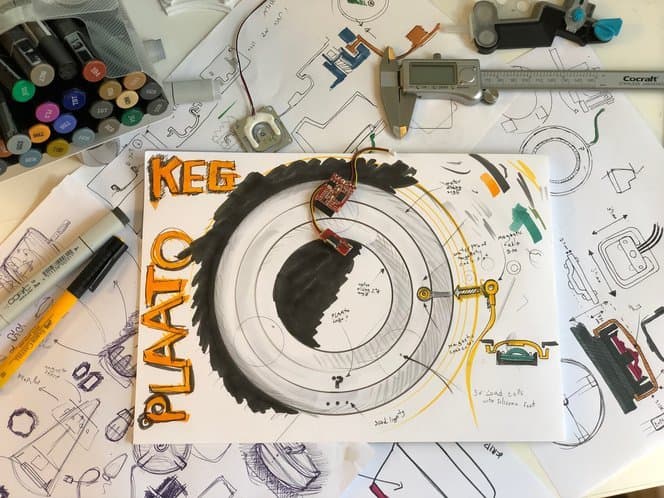
Imagine you have a vivid idea for a new production. Y'all design the product, engineer it, and coil it out—but your customers aren't interested!
This is a mutual problem for all sorts of businesses: each year, more than than 30,000 new consumer products are brought to market—and 80 percent of them fail. How tin can you ensure your product idea is part of the successful xx percentage?
Proof of concept—an initial test and validation of the product thought—is a huge function of the equation. Developing a proof of concept is an essential manner to exam, fine-melody, and bear witness your production'southward success. This article volition explain what a proof of concept is, as well as how to create and exam your proof of concept.
Proof of concept (POC) refers to an initial examination of an thought, method, or product to bear witness its potential and feasibility in real-world settings. A proof of concept occurs during the ideation phase of a project—before extensive design and engineering work actually begins on the project—and usually consists of a small and relatively simple or undeveloped version of the desired final result.
The purpose of a proof of concept is to validate assumptions and illustrate that a new production or idea can be successful. Team members can use the proof of concept as a tangible way to assist place any unforeseen risks in the production or execution of the product or idea.
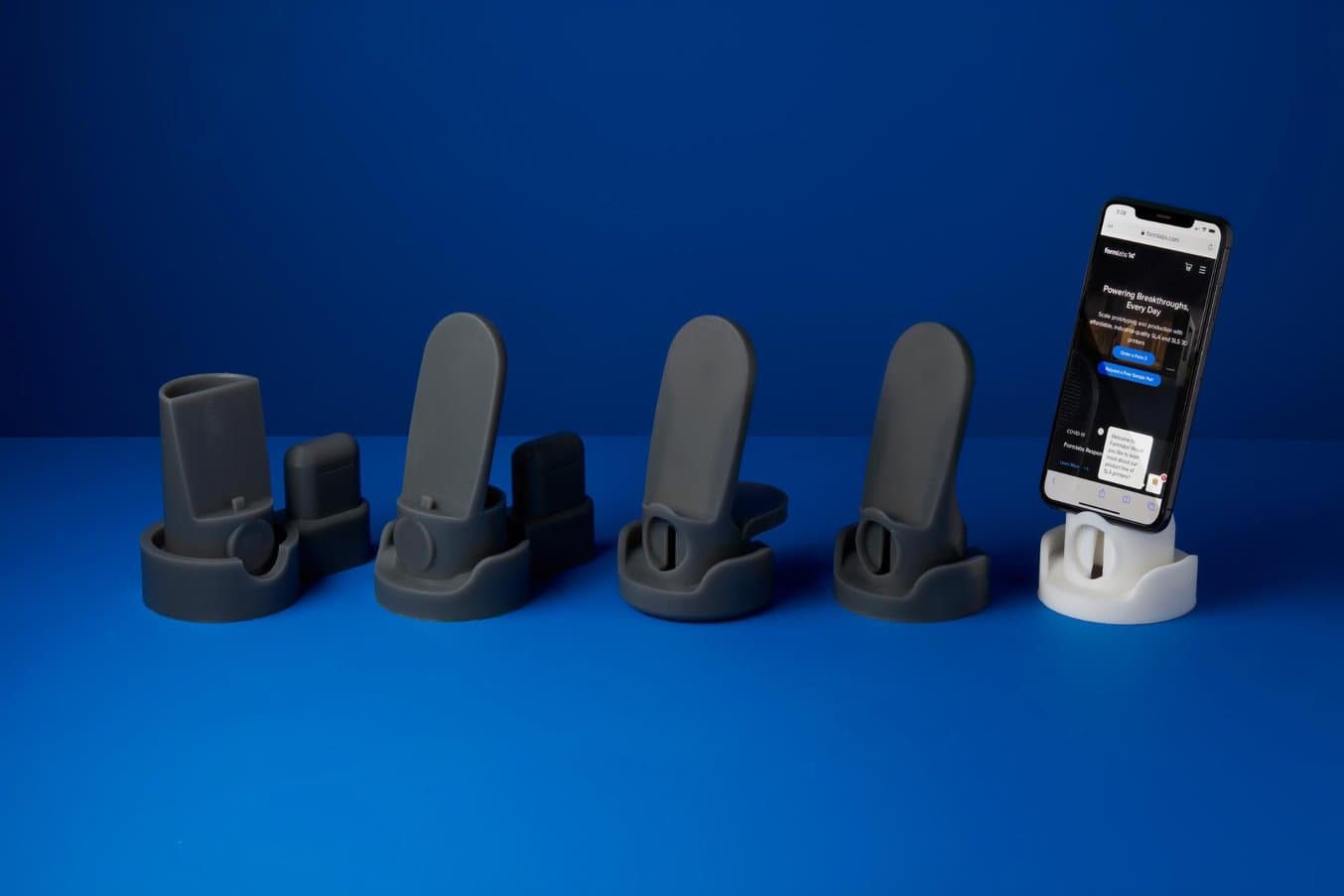
A proof of concept should be elementary, just sufficient to imitate how the product works. For example, the POC for a charging stand up might just be a 3D printed enclosure connected to a standard USB charging cable. 3D printing is a popular way to create proof of concept models rapidly and at a low cost.
White Paper
Looking for a 3D printer to create proof of concept models? Download our white paper to acquire how SLA printing works and why it'due south the well-nigh popular 3D printing process for creating models with incredible details.
Download the White Paper
A proof of concept might seem like to a prototype, a pilot, or a minimum viable product, but each of these things actually serves a unique purpose in the product ideation and evolution process.
Although a proof of concept might seem like to a prototype, their objectives are very different. A prototype is an actual working model of a product that shows exactly how the product will office in terms of mechanics, blueprint, user experience, and so on.
While a proof of concept just tests the viability of a new thought, prototypes bear witness exactly how that idea can happen. A proof of concept might simply imitate how the product works, while the actual functionality of the product is carried out past humans or other tools, while a prototype would function enough like the last product that the client could reliably use information technology to visualize the end result.
A pilot is a more advanced stage of testing than both proof of concept and prototyping. A pilot is, in fact, the final testing stage before total production of a new product.
During the pilot stage, a company allows real customers to try out the product, ensuring that it will indeed office properly upon a full rollout. Pilots are commonly tested on a pocket-size segment of a business concern'south customer base in a phased approach. This gives the company time to piece of work out any last-minute bugs, or fifty-fifty whorl back the pilot if more significant problems arise.
Although they have some things in common, proof of concept and minimum viable product differ significantly from each other. Minimum viable production refers to a pared-downwards version of a new product that only performs the core functionality, without whatever additional features. The company can and then examination the minimum viable production or put it on the market for real customers to try.
The purpose of a minimum viable product is to test whether there is a market place for the core functions of a new product. The top reason start-ups fail is a lack of market place need for their production, so it'due south important for a visitor to examination whether there is really pregnant interest in its production before spending time and money developing a full-featured version of the product.
| Proof of concept (POC) | Prototype | Pilot | Minimum viable product | |
|---|---|---|---|---|
| What it is | Initial test of an idea, method, or production | Working model of a product | Phased rollout of product to a customer sample | A pared-downwardly version of a new product that only performs core functionality |
| Purpose | Testify product potential and feasibility in existent-world settings | Show how the product will work; help stakeholders visualize the product | Identify unforeseen bug before the last rollout | Exam whether there is a market place for core functions of new product |
| Stage in production evolution | Ideation phase | Design and applied science phase | Validation and final testing phase | Validation and/or production phase |
Creating a proof of concept is an exciting challenge that takes care and creativity. Your ultimate goal is to know your audience inside and out, and to exist able to express exactly how your product will serve their needs.
The proof-of-concept process should adhere to the following steps:
-
Empathize your audition's pain points. Written report what solutions your customer base of operations is looking for through conversations with potential users, surveys, and market place research. Use your research to create a specific list of hurting points that your product should solve.
-
Evaluate possible solutions. Use your listing to map out potential solutions to the hurting points it contains. Compare the different solutions for feasibility, cost, timeline, and other factors. Have your elevation solutions back to potential users to consult with them.
-
Create a proof of concept. Armed with feedback from potential users, create a proof of concept of the product that addresses pain points and provides solutions. Have the representatives from your customer base exam the POC and provide input.
-
Refine the product idea according to feedback. Utilise the feedback from your potential users to fine-tune the product idea. Identify what works about the solution, as well equally areas of comeback based on client reactions to and experiences with the POC.
-
Finalize your proof of concept.Create a finalized proof-of-concept proposal that presents the functionalities, features, and benefits of the product. The proposal should also include details like timeline, cost, success criteria, and resources needed. The completed proof of concept can exist presented to stakeholders, who tin can approve the production for evolution.
Each pace of the proof of concept process requires specific deliverables to ensure success. Here are the other deliverables y'all'll need throughout the proof-of-concept process:
-
Ideation phase: To start, the first deliverables you'll need to include a proof of concept plan and schedule, as well equally criteria for success.
-
Research stage: As you interview a representative sample of your customer base of operations, your end goal should be to assemble apply cases and revise your success criteria based on customer input.
-
Creation phase: When y'all get to the betoken of creating a POC, your deliverables include the prototype blueprint, an implementation plan, and updated success criteria.
-
Testing stage: As you lot and your customer sample examination the POC, you should be working toward the following deliverables: test cases, examination scripts, and examination results.
-
Finalization stage: At this point, your deliverables should include an evaluation model, a finding summary, and an execution plan. You can share these with key stakeholders every bit you gear up to move into development.
The tools you'll need for a proof of concept differ somewhat based on manufacture: for instance, if your company is in engineering or hardware product evolution, y'all won't need nonetheless tools as a company that works in software development. The post-obit are some tools you may need as you develop your proof of concept:
-
Project management software: Project management software is helpful to any company, regardless of manufacture, as it moves through the proof of concept process. The POC process should be guided by a plan and schedule with specific timelines and benchmarks at each stage. Using a project management tool that everyone on the team tin can reference will help keep all squad members aligned and on rail.
-
Online market inquiry tools: These tools are universally helpful during the proof of concept procedure. Tools that provide insight into dissimilar demographics and customer segments are essential. In addition, online survey tools tin can help you attain a larger customer sample than y'all could through just conducting interviews.
-
Prototyping tools: Prototyping tools differ based on industry. For example, a software company will likely utilise its existing software tools to create a epitome, while companies in engineering or production development might use anything from basic model making tools to digital fabrication tools to create a physical model of the design in question.
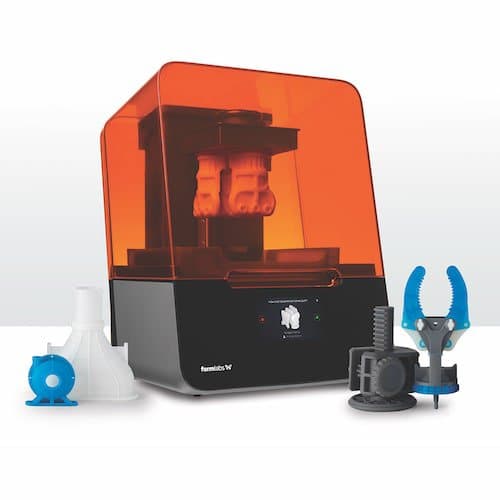
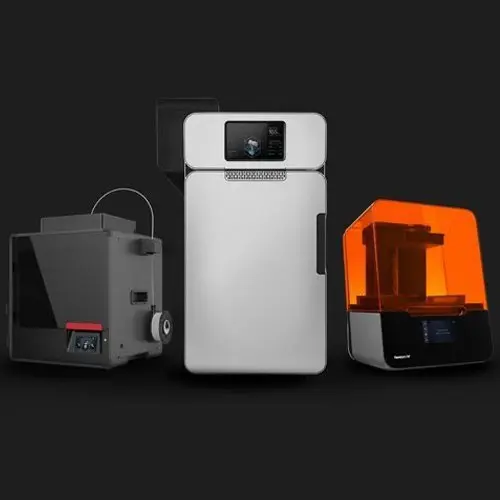
3D press has become a very popular style to efficiently create proof of concept models, besides as visual and functional prototypes. If your company does a lot of prototyping, consider bringing your 3D printing in firm. Desktop 3D printers, similar the Form 3, offer a wide range of materials and applications at a price point accessible to well-nigh companies.
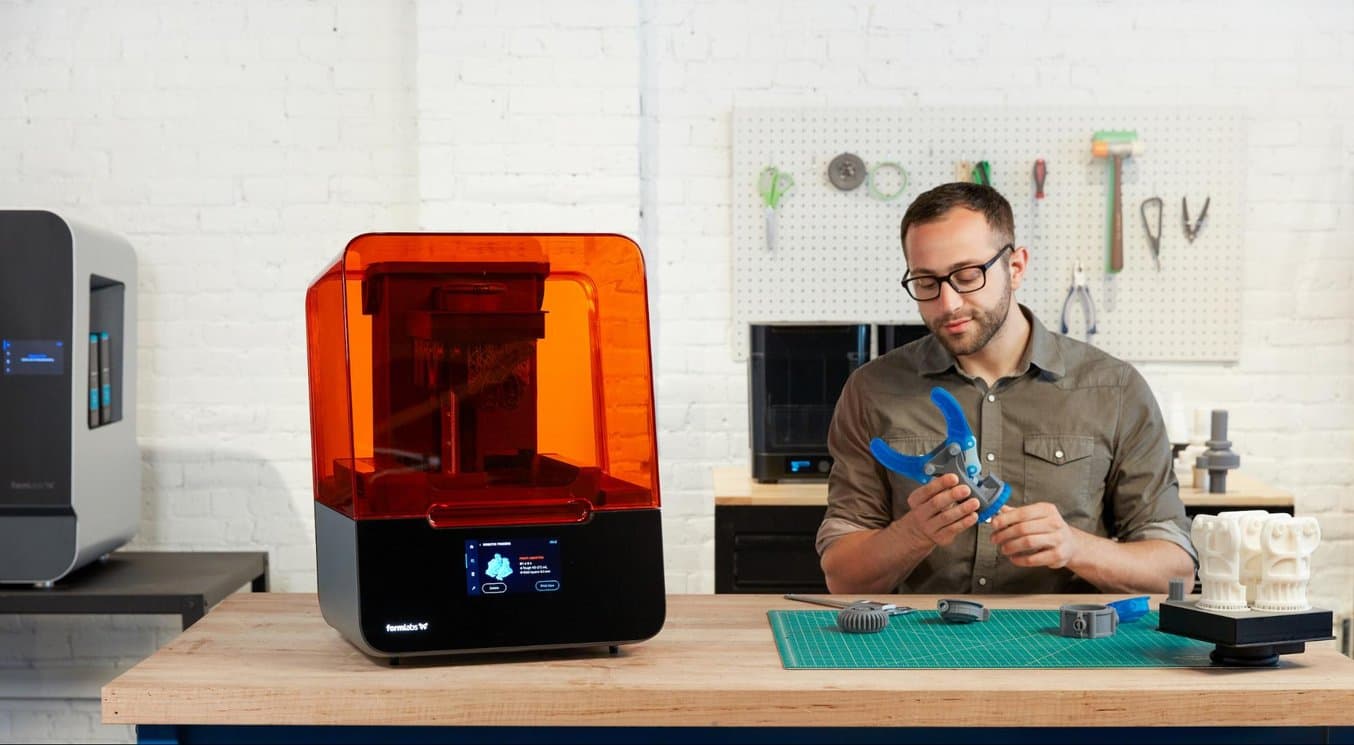
3D printers tin aid you throughout product development, from creating proof of concept models to visual and functional prototypes.
Video Guide
Having trouble finding the best 3D printing technology for your needs? In this video guide, nosotros compare FDM, SLA, and SLS technologies across popular buying considerations.
Watch the Videos
The whole purpose of a proof of concept is to test an thought for efficacy before yous invest significant amounts of time and money into it. The primal to constructive proof-of-concept testing is to take your time surveying and interviewing a sample group of customers throughout each footstep of the proof of concept process, developing a greater and greater agreement of their specific hurting points and what they want your solution to achieve.
Hither are the steps you should follow in the proof-of-concept testing process:
-
Cull your testing tools. Although it might toll more, you should invest in up-to-date testing tools. Customers wait more and more from today's products, so your company can't afford to miss out on the newest marketplace research or the fastest and easiest ways to receive customer feedback—both of which a adept testing tool can provide.
-
Ascertain client segments. You shouldn't look the same pain points and desired solutions from all your customers. Customers will have different wants and needs based on factors such equally location, industry, age, and then on.
-
Crystallize your testing goal. Don't motion forward with a vague goal, such as "Get customer feedback on the concept." Instead, go into testing with a specific goal in mind, similar "Determine whether customers discover the product design intuitive to use."
-
Gather feedback from customers again and again. When you comport one test, your work probably isn't done: y'all'll probable become results that need clarification through further testing. For case, say y'all're testing a production that's supposed to take an intuitive design, merely only half of your sample customers find the production intuitive to use. You lot'll need to gather feedback from the other half of your customer sample, modify your pattern based on their hurting points, and retest the design.
It's important to remain clear on the ultimate goal of a proof of concept: to demonstrate that a new product or idea can be successful. Through conscientious, targeted tests of customer demographics, you tin can get together invaluable insights into what volition brand your product a success.
Creating a proof of concept is an important step in the product development process, as it will let your production team and stakeholders to build a solid foundation. Once your concept is validated, information technology's fourth dimension to move onto the next stage and prototype your final product. To streamline your prototyping process, read our Ultimate Guide to Rapid Prototyping for Product Evolution.
Source: https://formlabs.com/blog/proof-of-concept-poc/
Belum ada Komentar untuk "How to Get Paper Whites to Bloom Again"
Posting Komentar