Can I Use My Own Car Seat With Uber
Self-driving cars: your complete guide to autonomous vehicles
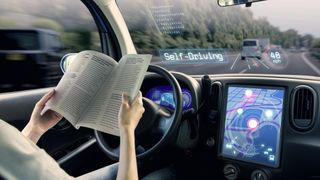
Cocky-driving machine technology is advancing every solar day, and it's only a matter of time before fully driverless vehicles appear on public streets.
Most daily, in that location's a new development in the driverless car space, and virtually every major car manufacturer, ride-sharing service and tech company from Apple to Google has bought into the driverless car industry.
And, if you take all the driverless auto chatter at face value, we're only a couple years away from a utopian social club where cars will navigate and park by themselves, and accidents become a rarity.
In fact, Google wants to have a cocky-driving ride-hailing service on the road by the stop of this twelvemonth. Apple self-driving cars, meanwhile, are spotted regularly, driving down the road with rigs housing everything that'south needed to run a self-driving experience.
While the driverless car industry continues to grow, one unfortunate plow in the journey of cocky-driving cars is a number of accidents, some of them fatal, which show the technology that cars use to spot pedestrians and other obstacles and avoid collisions still has a long way to go.
With more companies applying for permits to test driverless cars on public roads, and more than public scrutiny on the tech than ever before, we thought information technology best to break downwards how companies like Apple tree, Google, Uber, Tesla and others train artificial intelligence to see the road—and which AIs might have a blind spot.
Nosotros've also gathered the latest details on which countries let public driverless automobile testing, which companies are developing the smartest self-driving artificial intelligence (AI) models, and what the time to come of the driverless car industry could bring in the side by side few years.
What is a self-driving car?
Merely put, a truly driverless car must be capable of navigating to a destination, avoiding obstacles, and parking without whatsoever human intervention.
To accomplish this, a driverless car must take an artificial intelligence arrangement that senses its surroundings, processes the visual data to determine how to avoid collisions, operates machine machinery like the steering and brake, and uses GPS to track the car'due south current location and destination.
Without an AI, cars cannot be truly driverless.
Companies like Google'southward Waymo put have put AI inside virtual cars and accept the vehicles 'bulldoze' billions of virtual miles, throwing every perceivable obstacle and state of affairs at the cars to see how they respond.
The AI learns what actions pb to crashes, and slowly learns how it should drive on real roads.
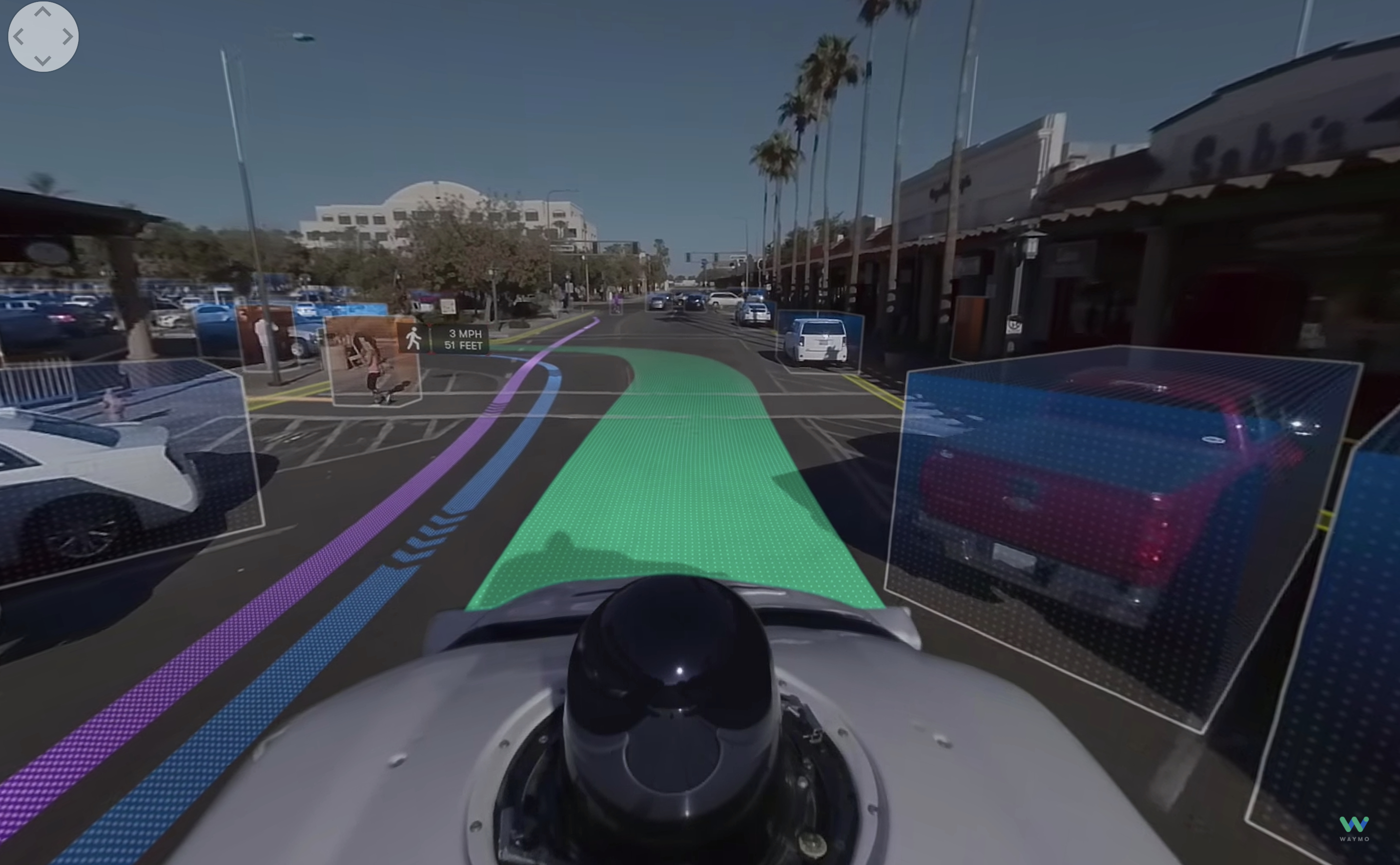
To perceive visual surroundings, nearly self-driving cars have some combination of iii visual systems: video cameras, radar and lidar.
The AI synthesizes the data from these different systems to fully map out its environs and watch out for unexpected obstacles.
Well-nigh driverless cars require all iii: AIs require visual cameras and deep learning software to interpret objects like street lights and stop signs, and while radar catches most obstacles instantly, it's not as skilful as spotting smaller obstacles as lidar.
What is lidar?
Lidar sensors emit light waves in all directions; the light waves reflect off of objects and return to the sensor, measuring the altitude between car and object.
Billowy to and from the sensor millions of times in a single 2nd, the light waves create an instant, constantly updating 3D map that will spot obstacles instantaneously.
Still, some vehicles with autonomous capabilities similar Tesla's Model 3 don't apply lidar; Elon Musk famously called lidar an overly-expensive "crutch", and that cameras and radar should suffice.
I matter to consider: the Model three, along with pretty much every other "self-driving car" currently out there, aren't truly "driverless".
Nigh people tend to use terms like "driverless", "autonomous" and "self-driving" as interchangeable.
Just, there are significant differences in the tech required for an "democratic" AI that can but handle highways and a truly "driverless" or "cocky-driving" machine that doesn't even need a steering wheel or man operator to park or navigate.
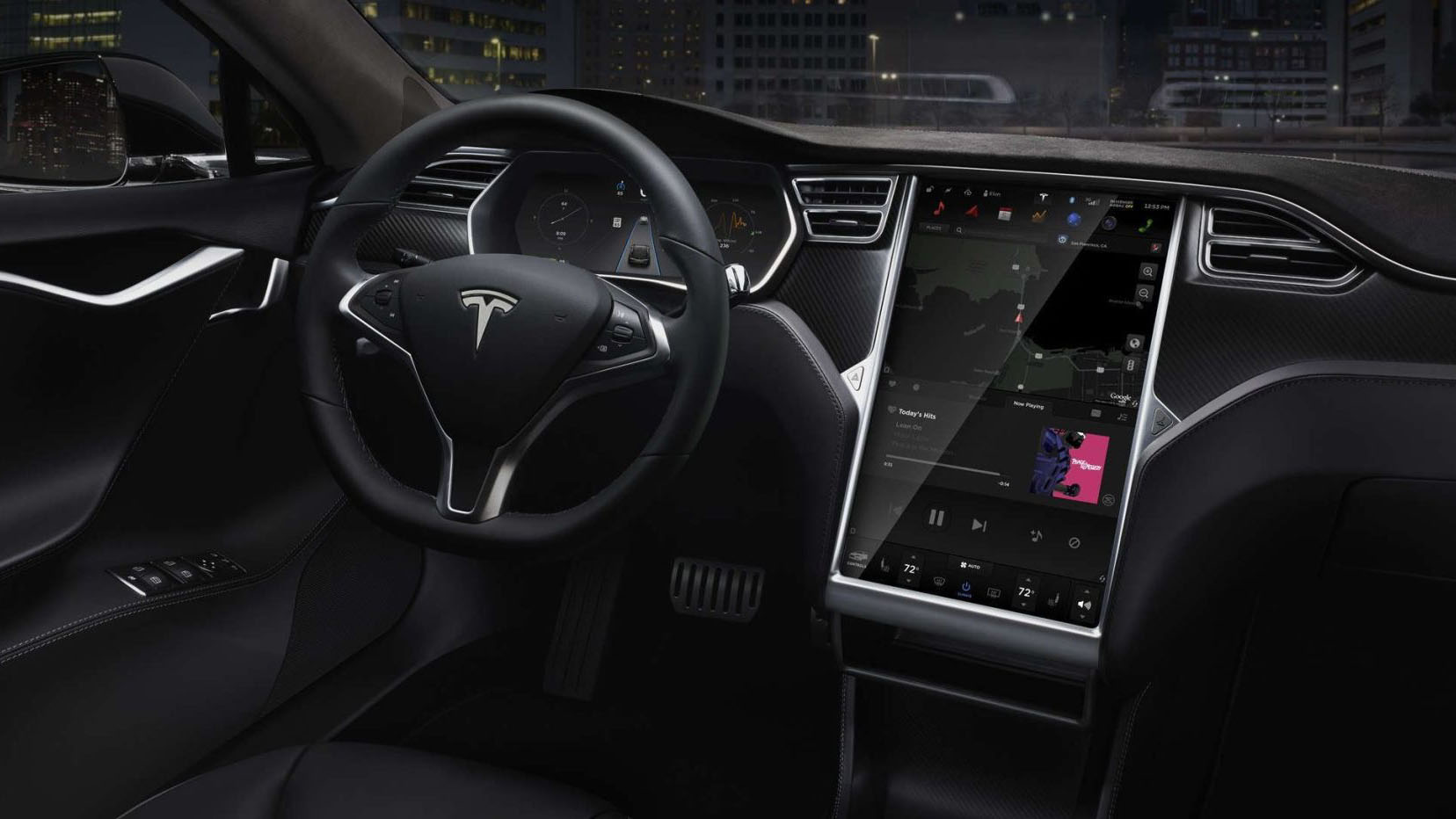
Some automobile companies tend to fog the consequence by challenge cruise control tech for driving direct and avoiding obstacles is "cocky-driving".
Mercedes-Benz actually had to pull ads that claimed its 2022 E-Grade was a "vehicle that could bulldoze itself."
But, until AI tech is sophisticated enough to drive somewhere like a school crossing without any danger to pedestrians, about, though non all, governments won't permit cars to drive without a human being seated behind the cycle.
Why should this matter to you? Considering some drivers are feeling safety enough to exit the driver's seat while their motorcar is in movement, putting pedestrians (and themselves) at risk. It'south vitally important that the autonomous vs driverless distinction become more clear to the public.
So, while we're covering autonomous cars in this piece, don't error them for being driverless; most of them have at least a few years before their AIs can properly navigate the world without a human crutch.
Why do we demand self-driving cars?
For commuters, the answer is obvious: a take chances to grab some extra shut-eye, get work done or watch Netflix instead of spending hours navigating through traffic.
But why have companies invested an estimated $80 billion and years of piece of work into this applied science?
For starters, it could simply be a case of jumping on the bandwagon. Pretty much every major automobile company has adult or implemented some kind of autopilot applied science into their cars. Non having that tech available could make a brand look out of date.
Just, at least some companies have bold business plans for self-driving tech beyond simply fitting in with everyone else.
Nearly motorcar brands are very concerned with their crash safety ratings. If driverless car tech will truly reduce the rate of accidents, car companies volition want to push this tech forward. AI safe ratings could even get a future metric for prospective car buyers to await at.
- Tech for your machine: these are the best dash cams around
Ride-sharing services like Uber and Lyft, meanwhile, programme to brand their taxis driverless, which would hateful non having to pay homo drivers.
In January, Uber CEO Dara Khosrowshahi said he wanted to accept self-driving taxis picking up passengers by 2019, and that 20% or more of Uber's fleet could be driverless.
However, Uber'south self-driving car ambitions take hitting a major roadblock, which nosotros'll detail further on Pages 2 and three.
Other companies like Ford hope to contain their cars into city-wide networks that will track traffic weather and available parking, then the company's self-driving cars volition reach destinations faster than other cars.
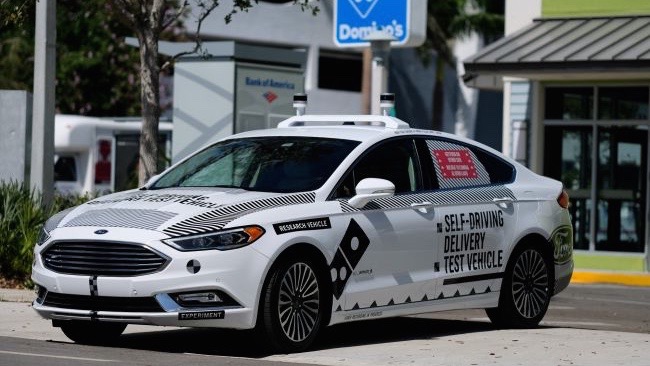
And so, of form, Ford will sell its self-driving cars as a service to delivery or ride-sharing companies; Ford has already partnered with Domino's and Postmates to deliver packages and pizza in a car that's not actually self-driving, merely pretends to be in order to judge the public'south reaction.
Near of these companies don't want consumers actually buying their self-driving cars.
Just, at to the lowest degree ane machine industry good claimed that car companies want their driverless tech to be a "regularly recurring subscription model", where customers, even used-car buyers, accept to keep paying for the right not to drive.
Whatever the reasons, these companies take invested also much coin in driverless machine AIs to cease now, despite the fact that many countries haven't fully approved the employ of self-driving cars yet.
Businesses clearly seem to remember it's only a matter of time before driverless cars are on the road.
Where are self-driving cars being trialled?
While self-driving car companies have convinced many state and national governments to let them test their AIs on public roads, nearly all governments strictly limit the cars from driving outside of testing tracks, with a few notable exceptions.
In the United States, 33 states take enacted legislation to allow for limited cocky-driving tests, but merely a few states and cities allow AIs be in command on public roads—and even and so almost always with strict human being oversight at all times.
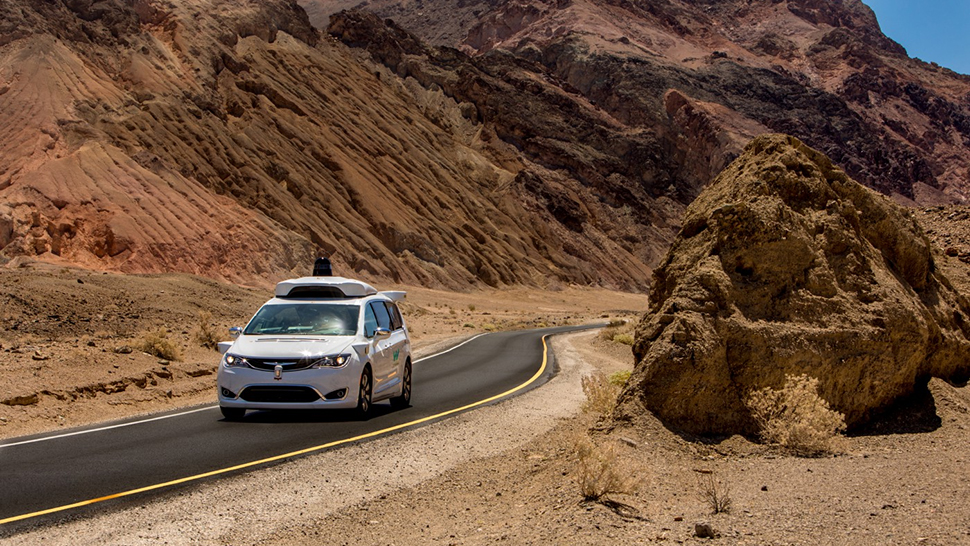
The exception to this rule is Phoenix, Arizona, where Waymo has been testing self-driving cars without condom drivers on the metropolis's streets.
Uber was also testing self-driving cars in Arizona until a high-profile fatal accident led to the state's governor to suspend Uber's testing privileges indefinitely.
Uber eventually announced the closure of its self-driving car program in Arizona on May 23. Its program remains suspended elsewhere in the land.
California is another hot spot for self-driving cars, both considering Silicon Valley hosts so many tech companies and considering California no longer requires a human behind the wheel if companies tin can prove their AI is up to the task.
Cities in the Us where y'all're most likely to spot driverless cars include Mount View and San Francisco, California; Phoenix, Atlanta, Pittsburgh, Miami, Austin, Detroit and New York City.
Europe, home to several huge car manufacturers, has many receptive countries that allow for limited driverless testing.
Germany recently canonical Volkswagen to begin testing self-parking cars at the Hamburg airport.
For its office, Volvo is testing driverless cars and buses in Stockholm, Sweden. In kingdom of the netherlands, Amber Mobility plans to launch a Zipcar-like service of electric driverless cars in several Dutch cities in mid-2018.
In the United Kingdom, notwithstanding, the government recently initiated the UK Autodrive initiative to push autonomous innovation, just, at the same fourth dimension, the government is also conducting a three-twelvemonth review of cocky-driving applied science's safety implications, and hasn't approved testing on public roads yet.
Australia, by contrast, has begun some public testing, but some reports say the country is lagging backside other countries in scale.
In Asia, countries similar Mainland china, Nippon and Singapore have enabled companies to brainstorm testing self-driving taxis, merely ever with a human behind the wheel. Uber rival Didi Chuxing is 1 company leading China'due south push for self-driving tech.
As for self-driving tech found in cars like Tesla's? You lot can find that in pretty much every nation, although most road laws dictate that drivers keep their hands on the wheel and optics on the road at all times.
So, who's making driverless cars? The answer: Everyone!
OK, that's not entirely true, and yous probably desire more details than that.
Major tech companies, from Apple tree to Google to Uber, have been working in the self-driving auto space. Apple'due south self-driving machine was recently spotted past TechRadar, and we've got a full breakdown of everything having to do with the Apple Car in our in-depth guide.
Almost all of the top-selling auto brands in the US— Ford, GM, Toyota, Honda, Volkswagen, Nissan, Volvo, BMW and more—take been working on driverless cars for years, often in collaboration with components providers like Nvidia and Intel.
We've got the breakdown on the biggest players in the driverless car space today, plus requite insight into which of them look nigh likely to achieve truly driverless cars in the near future.
Apple self-driving cars
The Apple tree Car is a long-continuing Silicon Valley rumor, and while initial reports indicated the tech giant would build its own driverless electric vehicle, the story has changed drastically in the terminal several years.
For its part, Apple has admitted that it'southward interested in creating the autonomous systems that run self-driving cars, and not an actual car itself.
Still, Apple tree is actively testing its self-driving automobile tech, evidenced by several automobile sightings in the last few years. Though the vehicles lack proprietary markings, the cars are bedecked in all the gear needed to run self-driving systems and are often seen driving around Apple tree function buildings and into Apple complex parking lots.
TechRadar spotted one Apple Automobile in May 2022 as it was driving on a public road and going into the parking lot of a cluster of Apple office buildings in Sunnyvale, California. The motorcar was sporting a unlike-looking rig than we've seen on the vehicles previously.
Here's exclusive video of the Apple self-driving car we saw in May 2018
Apple's self-driving cars are coming out of the shadows and onto public roads, simply that'south not all that'due south circulating about Apple'due south automotive project.
In May 2018, it was revealed by the California DMV that Apple's autonomous auto permit now covers 55 cars and 83 drivers, giving information technology the 2nd biggest autonomous car fleet in California, behind GM Cruise's armada of 104 and alee of Waymo'south 51.
A contempo patent also showed Apple'due south plans to install VR devices into its driverless cars to entertain passengers, another sign that Apple tree is working on systems for self-driving cars and not necessarily vehicles themselves. A 2d newly discovered patent describes "intent signals" as a method passengers would utilise to bespeak where they want the auto to go.
The patent suggests a joystick, a phone'south accelerometer, or voice commands could be used to suggest alterations to a road, choose an open parking space, or instruct the car to park close to a sure part of a store, like virtually a specific entrance.
All of this points to Apple's involvement and active development in the driverless motorcar space. Nosotros wouldn't be surprised to see Apple'south self-driving projection come to light in the next ane to three years.
Google's driverless cars
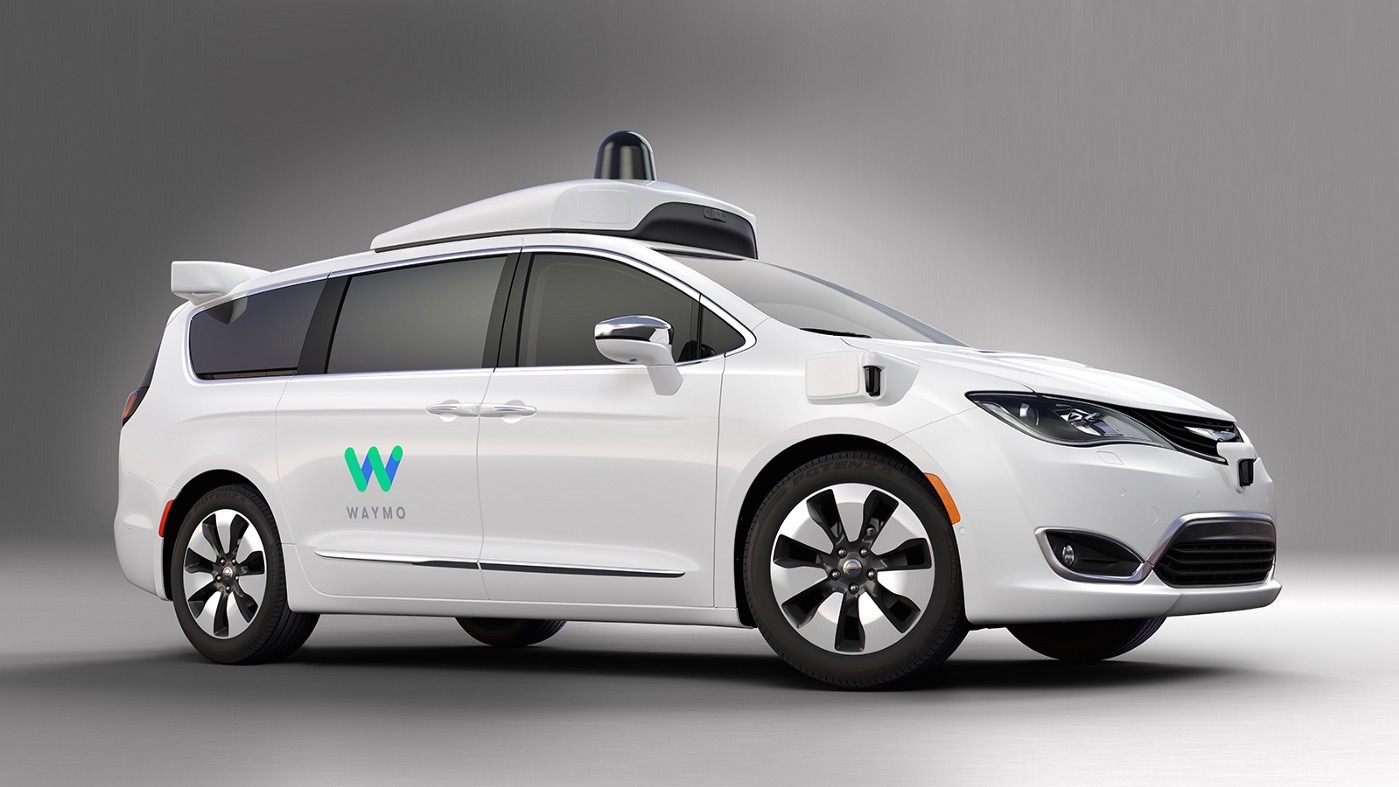
Waymo, the self-driving car partitioning of Google'due south parent company, Alphabet, was formally launched in late 2016, but its self-driving tech has been in development since 2009.
And that near-decade of piece of work has paid off in arguably the most reliable driverless car nosotros've seen to date.
Disengagement—when a human driver has to have control of a self-driving car—is the master metric past which automakers approximate their self-driving AI'southward technical skill. And Waymo's cars lead the pack: Waymo cocky-driving cars disengage 0.eighteen times every one k miles.
For context, if a Waymo car drove across the United states of america and back, a human would on average take to arbitrate one time. Only GM's self-driving cars come close to that level of disengagement, averaging almost 1,000 fewer miles per disengagement.
How has Waymo's squad accomplish this level of reliability? With a powerful system of half-dozen lidar sensors that instantly notice whatever potential hazards, and a deep learning system sophisticated enough to respond instantly to obstacles and weather hazards.
Waymo collects its lidar, radar and camera feed information into an amass map of the surrounding road, which the company calls x-view.
The video to a higher place shows a stylized version of how x-view can detect people and avert accidents.
Waymo'due south cars take driven half-dozen one thousand thousand miles on public roads thus far, along with ii.7 billion virtual miles inside of traffic simulators.
Sometimes the auto's ability to bulldoze itself can't keep it out of every accident though, equally was seen in Arizona in 2022 when an oncoming car swerved across the route and crashed into a Waymo van, injuring the test driver inside.
Still, Waymo hopes to add to its fleet's mileage on public roads in the adjacent couple of years, as information technology rigs 20,000 new all-electric Jaguar I-Stride cars and an immense 62,000 Fiat Chrysler minivans with Waymo AI tech built in.
Waymo's partnership with Fiat Chrysler Automobiles (FCA) could eventually mean self-driving FCA-congenital vehicles condign available direct to consumers.
Waymo'due south bold goal is to launch a "driverless ride-hailing service" in Phoenix in 2018, and somewhen expand nationwide.
Waymo has recently been eyeing Europe as another expanse for expansion, but it may need to rely on strategic partnerships to exist competitive there. Waymo'southward parent company Alphabet has a shaky human relationship with the European union, and it lacks the brand recognition and loyalty that its European competitors accept.
We'll have to look and encounter if Uber's fatal cocky-driving car crash in Arizona or Waymo's own collision stall whatsoever of the company'southward plans, however.
Uber's driverless cars
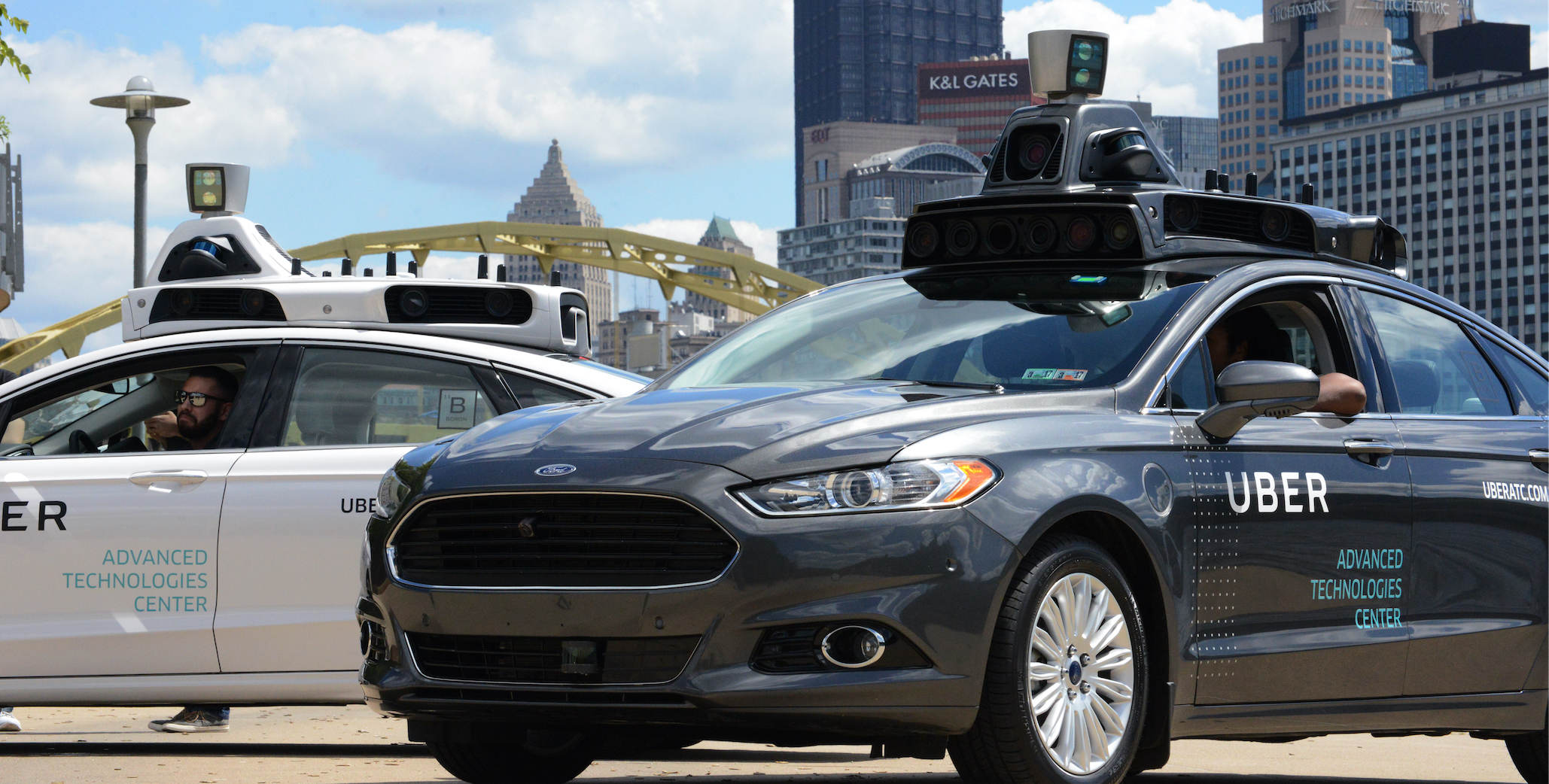
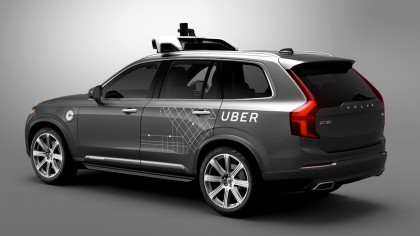
Uber'due south relatively late start to the self-driving game hasn't stopped the ride-sharing company from zealously testing its AI tech on public roads, hoping to crush Waymo to the dial and showtime its own driverless taxi service.
Later purchasing Otto, a self-driving truck company in 2015, Uber's ATP developed its own organisation of cameras, radar and lidar to track obstacles, using a Nvidia GPU to power its AI tech.
ATP reportedly settled on just one lidar sensor, compared to Waymo's six, to install on its 24,000 Volvo XC90 SUVs.
Uber's self-drivings car have driven over one 1000000 miles on public roads, though its detachment statistics don't stack up to Waymo'south: Uber reportedly only makes it 13 miles on average earlier a human must intervene.
Though it began with gusto, Uber's cocky-driving car program is currently in limbo. Afterward a fatal accident in Arizona in March 2018, the state'due south governor suspended Uber's power to test cocky-driving cars in the state. Uber had already shut down tests nationwide following the accident.
Then, in May, Uber announced it was shutting downward its cocky-driving car program in Arizona completely. It volition go along tests in San Francisco, Toronto and Pittsburgh, whenever tests resume.
When Uber'south tests begin once again, they will exist in a much more limited fashion than before. As far as when they start again, Uber CEO Dara Khosrowshahi hopes to see his autonomous fleet driving in the adjacent couple months.
Uber plans to accept findings from the National Transportation Safety Board's (NTSB) investigation into the fatal accident to brand changes to its plan. The visitor is also undergoing an internal rubber review.
The preliminary NTSB report reveals that while the vehicle had an automatic emergency braking feature, this was disabled because the auto was in "estimator mode." Citing Uber, the written report says the feature is disabled to prevent erratic driving behavior.
Though the car detected information technology needed to make an emergency braking maneuver 1.3 seconds before it struck the pedestrian who subsequently died of her injuries, the system doesn't alarm the driver to take control of the vehicle.
Y'all tin can read more than on what is in the initial NTSB study into the fatal Uber self-driving car crash here.
In calorie-free of the blow and subsequent fall-out, Uber'due south contributions to the driverless car manufacture have been overshadowed.
Work that Uber had washed included patenting a mode to foreclose motion sickness in passengers with a "Sensory Simulation Arrangement" that would adjust seats, air flow and in-car lighting to make riders more comfortable.
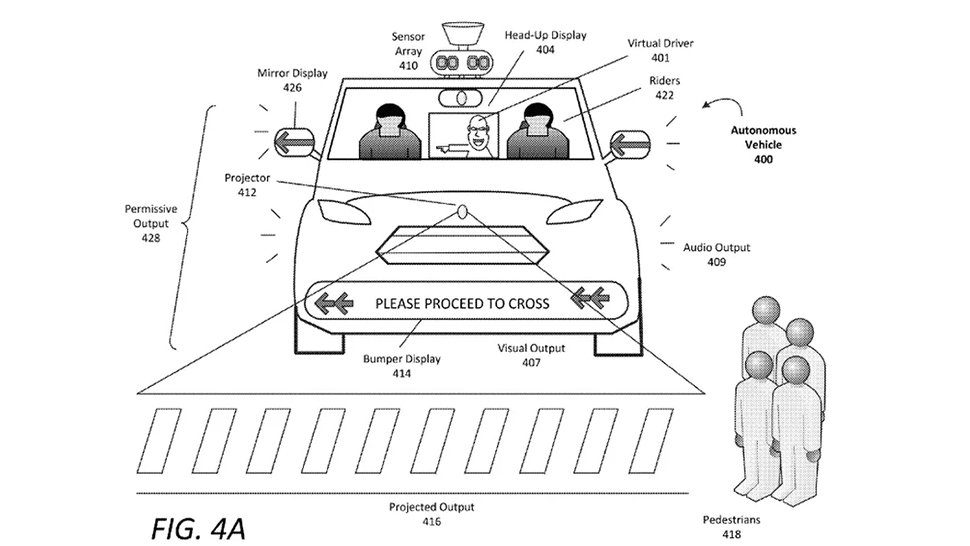
In another patent, Uber outlined how its cars could signal pedestrians or cyclists with flashing lights or a bumper text display—"intention outlets" that would aid cars experience less inscrutable and difficult to predict.
What'south more, Uber has developed an autonomous truck service that volition make freighting appurtenances across the country much easier for truck drivers.
Despite the piece of work that information technology's done in the self-driving car space, Uber has a large uphill battle before the public trusts its autonomous vehicles again.
One way Uber is eyeing as a ways for getting autonomous vehicles on the road without as great of rubber concerns is by partnering with Waymo. Uber's CEO has said the companies are in talks, trying to bring some of Waymo's vehicles to Uber's driverless automobile fleet. Nonetheless, given Uber and Waymo's past legal battle over trade secret theft, the grounds for a new partnership seem shaky.
Tesla's driverless cars

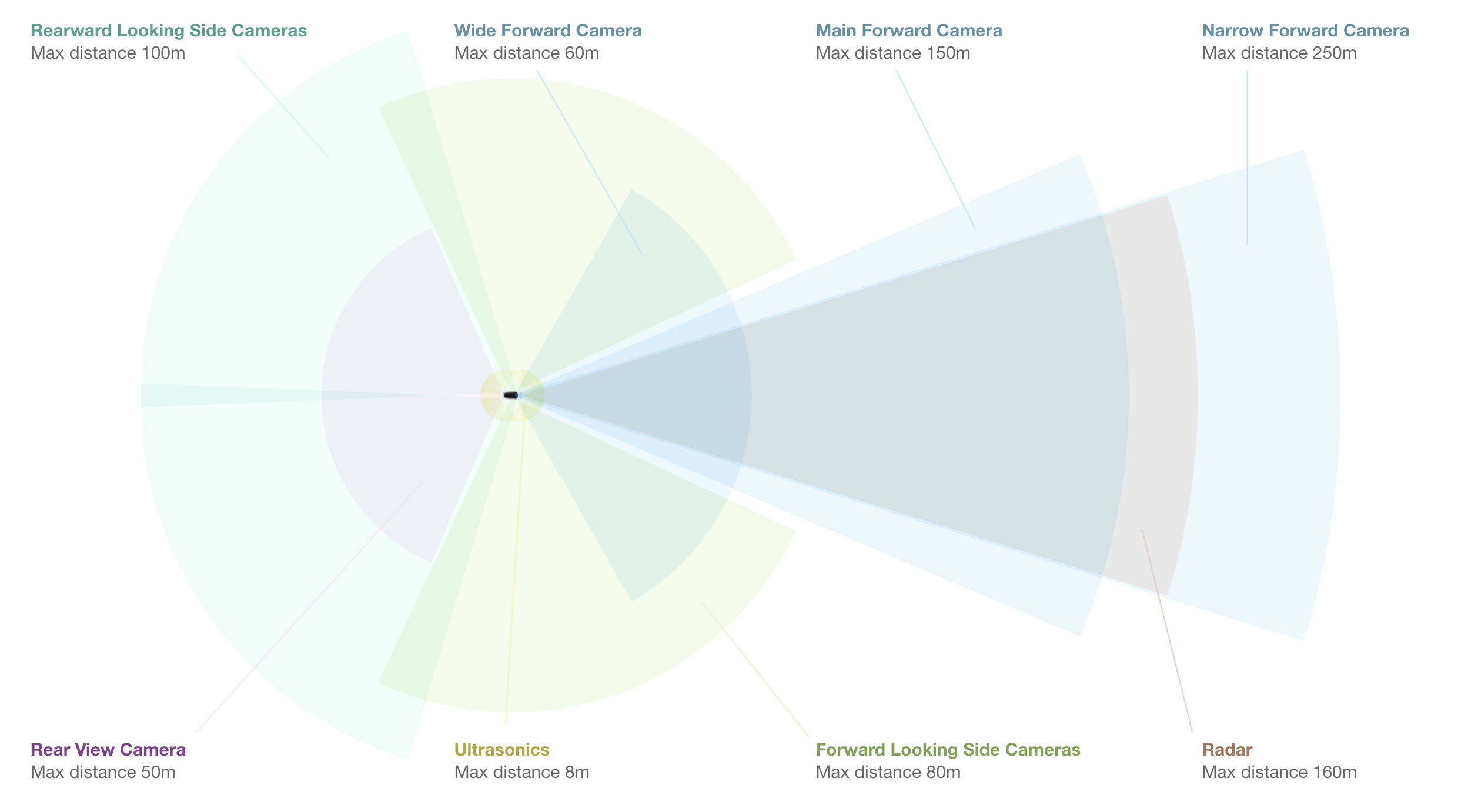
Tesla Model X, Model 10 and Model 3 cars all feature the latest version of Autopilot, a sensor organization of cameras, sonar and radar built for autonomous driving on highways.
Tesla'due south AI tin perform tasks similar preemptively shift lanes before an get out or to avoid slower traffic, and tin autosteer around more windy highways.
One time you go out the freeway, your car volition warn you to accept control of steering.
Equally of early 2016, Tesla owners had allegedly driven hundred of millions of miles in Autopilot mode. And, because Tesla scrapes data from all of its cars, it'due south able to gather information on apparent errors to improve Autopilot over fourth dimension. That dwarfs the mere millions of public road miles that nigh self-driving cars have accomplished.
Of course, Tesla's miles are autonomous, not driverless.
Tesla does sell models with "total self-driving capability" on its website, but these models plainly accept only double the cameras as a regular Tesla and no other major changes.
Moreover, Tesla admits that enabling this fashion would require "all-encompassing software validation and regulatory approval" that isn't yet available.
Even so, many drivers tend to treat Autopilot like a self-driving manner rather than equally a commuter aid systems, which has led to serious accidents, including in recent months.
1 recent crash killed a Tesla Model X driver when his motorcar crashed on a throughway in California. The driver had ignored Autopilot's warnings to assume command of the vehicle. The NTSB is yet investigating the crash.
Aside from another loftier-profile crashes, Tesla insists that its Autopilot and Autosteer tech mostly atomic number 82 to a twoscore-fifty% reduction in accidents. The below tweet shows how its tech can pick up on potential hazards most humans might miss.
Original video, authorization from the owner. Essential, no one could predict the blow simply the radar did and acted by emergency braking. moving-picture show.twitter.com/70MySRiHGRDecember 27, 2016
For now, Tesla hasn't announced whatsoever recent news on true driverless tech, and no one has spotted whatsoever cocky-driving patents by the company, either.
Information technology's unclear if Tesla is playing things close to the breast, or if it'due south content sticking with what it's done and so far while other companies duke it out over more challenging AI goals.
The other major players
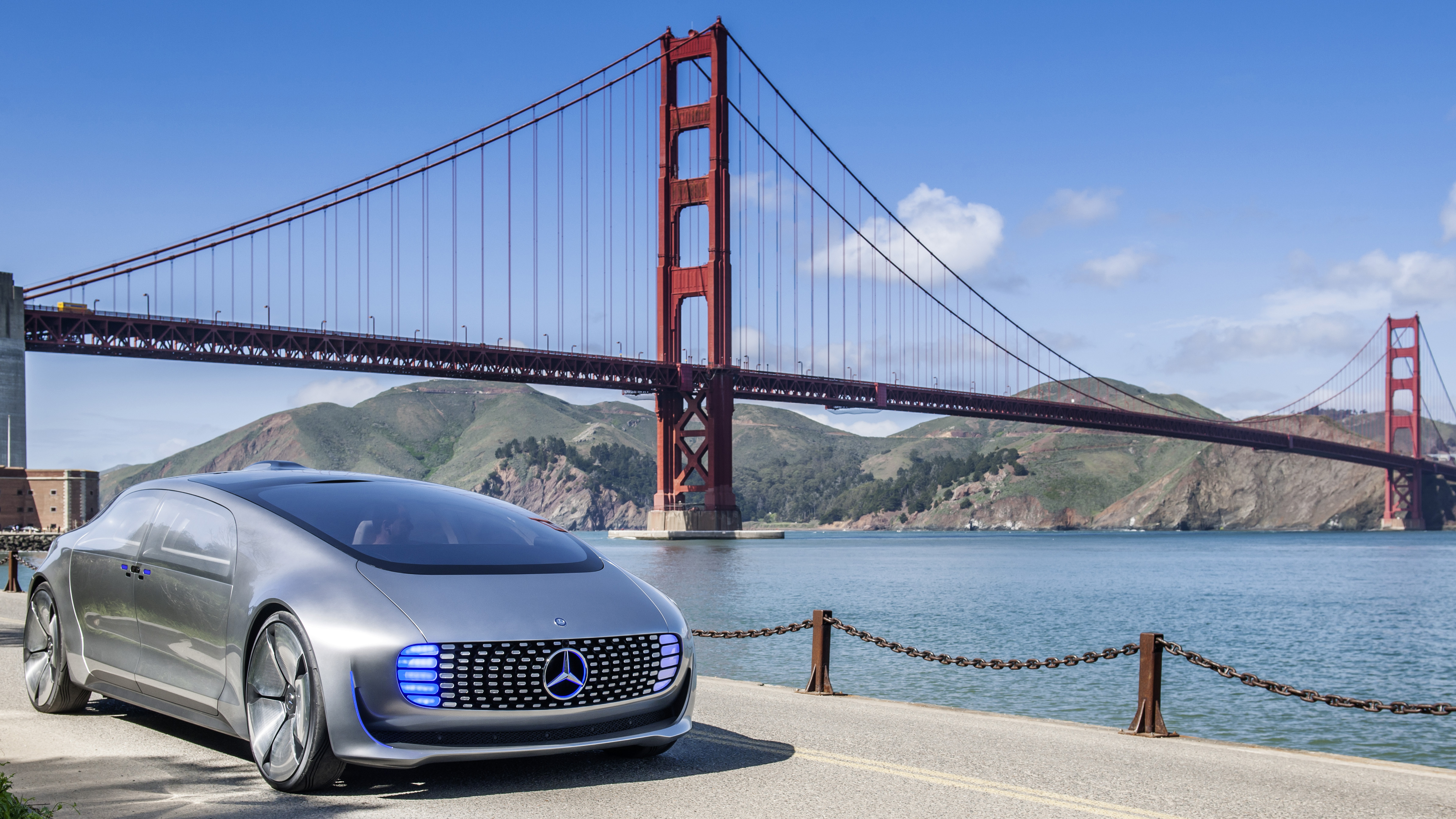
Outside of these three major players, many other companies are maneuvering to advance public testing, or even launch for-turn a profit driverless car services, in the next few years.
General Motors, the runner-up to Waymo in AI reliability, plans to start testing its cars in Manhattan this year.
New York is something of an Everest for self-driving companies to climb: building an AI capable of navigating the city's traffic and hoards of pedestrians is no easy task.
GM's fully automated Chevy Volts each have a $five million insurance policy for any potential crashes, and tin't enter any school or construction zones.
If the cars tin pass this gauntlet, GM's AI could be powerful enough for the Chevy Cruise AV, a truly driverless automobile without a steering wheel or gas pedal.
Only, GM isn't going to tackle this claiming lonely. Japanese visitor SoftBank is offer $2.2 billion in backing to GM for a 20% stake in GM's self-driving department. Of that money, $ane.35 billion is withheld until GM's autonomous vehicles are commercially ready.
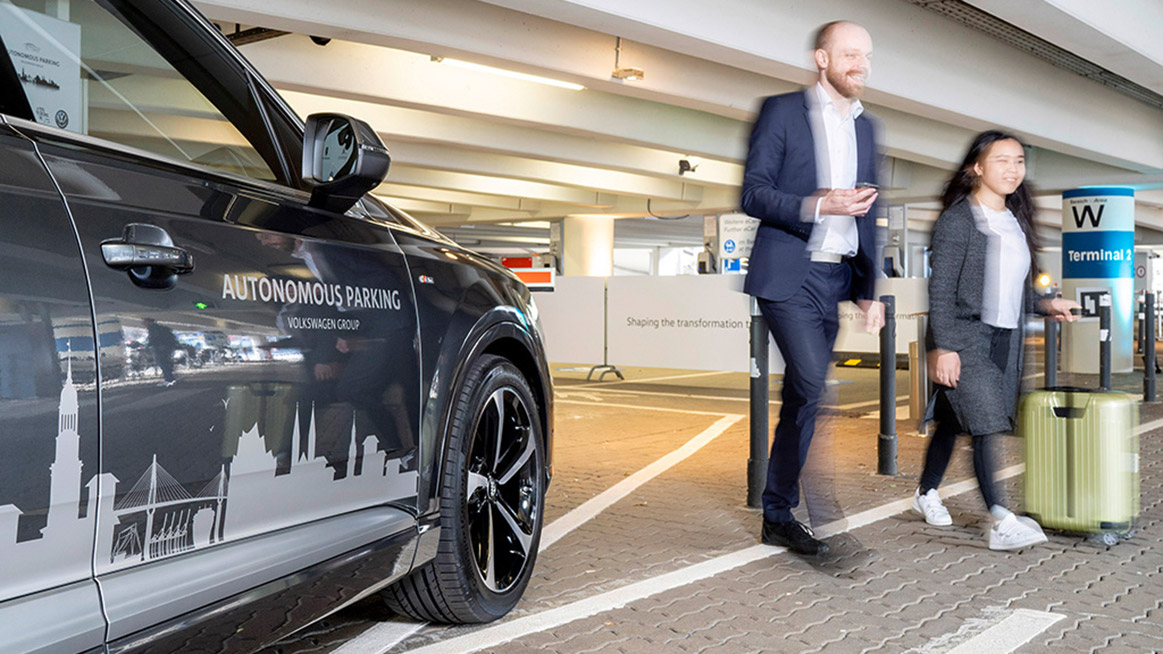
Volkswagen, conversely, is braving the cluttered battlefield known every bit parking garages for its testing.
At the Hamburg Airport in Germany, VW car owners tin simply driblet off their cars in front of the garage and activate a smartphone app; the car and so self-drives to a free parking space, using its GPS and cameras to navigate.
Eventually, VW has designs to brand your driverless machine maintain itself, and fifty-fifty do your chores. The company stated how its cars will be able to speak with city systems to find gratis parking, or drive themselves to gas stations or car washes for service.
Other big name car companies haven't fabricated their plans public for driverless cars, but do have dates in mind for when their AI tech volition be ready.
Hyundai hopes to take its cars fully driverless on the road by 2021, and Ford too aims to take its driverless AI and traffic-tracking engineering up and running in the same year.
Meanwhile, Google'southward rivals in the smartphone manufacture too have aspirations to take the search giant on in the self-driving manufacture.
Samsung recently got permission from the California DMV to test autonomous vehicles.
And even Huawei has jumped into the game, showing off a self-driving auto earlier this year that ran entirely off of camera data from a smartphone.
Finally, Lyft hopes to beat Uber at its ain game. Lyft launched its own self-driving sectionalization last twelvemonth, and have since teamed up with Ford and caused the assistance of an automotive parts supplier, Magna, for its self-driving automobile machinery.
With so many companies hoping to launch cocky-driving services and ramp upwardly testing in the next couple of years, driverless car tech must be upward to the challenge to avoid a rising in accidents as a result.
Both Uber and Tesla have recently been embroiled in scandals surrounding their cocky-driving AI later on 2 fatal accidents this year.
Beneath, we've laid out the almost high-profile accidents to take place in the driverless car industry so far.
After this, you'll find our predictions how the manufacture could grow in the next few years—if accidents don't derail information technology entirely.
Self-driving machine accidents
In 2016, when Autopilot was nevertheless newly implemented engineering science, a Tesla enthusiast fatally crashed into a trailer while Autopilot was engaged.
At the time, at that place was awareness that Autopilot had trouble picking upwardly trailers on its cameras, but zippo had been done to set the event before the crash.
The incident was investigated by the The states's NTSB, which initially said Tesla'southward AI wasn't at fault simply eventually stated in 2022 that Autopilot's "operational limitations" played a function in the accident.
The agency warned that drivers using the organisation became too conceited to reply to any potential threats.
That pattern would somewhat repeat itself in a fatal 2022 accident, when a Tesla Model 10 driver crashed into a concrete barrier while using Autopilot.
According to Tesla, "The commuter had received several visual and ane audible hands-on alarm before in the drive and the driver's easily were not detected on the wheel for half-dozen seconds prior to the standoff".
The NTSB is too investigating this incident, and expressed displeasure that Tesla released its own results of the crash before the NTSB could publicly make its own argument. Tesla CEO Elon Musk claimed he had a duty to tell his customers the truth for safety reasons.
Lot of respect for NTSB, but NHTSA regulates cars, not NTSB, which is an informational torso. Tesla releases critical crash data affecting public safety immediately & always will. To do otherwise would exist unsafe.Apr 2, 2018
Prior to this blow, an Uber automobile with driverless technology struck a pedestrian equally she walked outside of a crosswalk at dark. This fatal collision led to Uber suspending all of its self-driving operations indefinitely.
As with Tesla, the NTSB investigation of the crash is still ongoing, though the bureau's preliminary report into the accident has been issued.
Some incredibly sad news out of Arizona. Nosotros're thinking of the victim's family as we piece of work with local constabulary enforcement to understand what happened. https://t.co/cwTCVJjEuzMarch 19, 2018
As for Google's well-nigh loftier-profile incident, information technology happened in March 2022 when a self-driving Lexus SUV attempted to brand a turn in front end of a autobus, with the car'south AI assuming the bus would slow down to permit it to practise so.
Still, the bus didn't cease, and the Google self-driving auto struck the bus's side at 2 mph.
In its monthly DMV report, Google detailed the crash, and said information technology had adjusted its AI's parameters to recognize that bus drivers are less likely to give right-of-way.
Nigh recently, a self-driving Waymo minivan was involved in an accident in May 2018, in Chandler, Arizona. But in this case, Waymo'due south AI was not to exist blamed for the incident.
According to the Chandler Police force department, a Honda sedan ran a scarlet light, then drove into oncoming traffic to avoid another car in an intersection, swerving direct into the Waymo minivan's path. The human being commuter backside the wheel suffered minor injuries.
Waymo released footage of the incident, which makes it clear that neither the AI nor the human operator could accept reasonably anticipated the crash.
Local police initially claimed that Waymo's car had been in autonomous fashion at the fourth dimension of the crash, but later affirmed Waymo's assertion that the machine had been in manual fashion, and they stressed from the start that neither Waymo nor the SUV driver was considered at fault for the incident.
Speaking with Forbes post-obit Uber'southward fatal accident, Waymo CEO John Krafcik said that, "Nosotros're very confident that our motorcar could have handled that situation."
Waymo will probably face up significant backlash if it does face a serious blow of its own afterwards Krafcik's bold claim.
Of course, we'll have to wait until authorities conclude their investigations into the recent self-driving auto accidents before we can fully assess how safe the tech is and what steps need to exist taken to avert future accidents.
What does the future agree?
The history of the driverless car industry has been one of bold promises, high-profile fiascos, and general dubiety about the futurity.
It's truly unclear whether governments will ever allow cocky-driving cars operate without a human operator on a national level, though it seems we are steadily moving in that management.
A inquiry squad establish that deep learning networks in self-driving cars are prone to make thousands of incorrect choices when faced with catchy scenarios.
The researchers are hoping to develop a more than complete exam for self-driving car companies to check whether their AIs can navigate these problems. But, in the meantime, more accidents could exist in store.
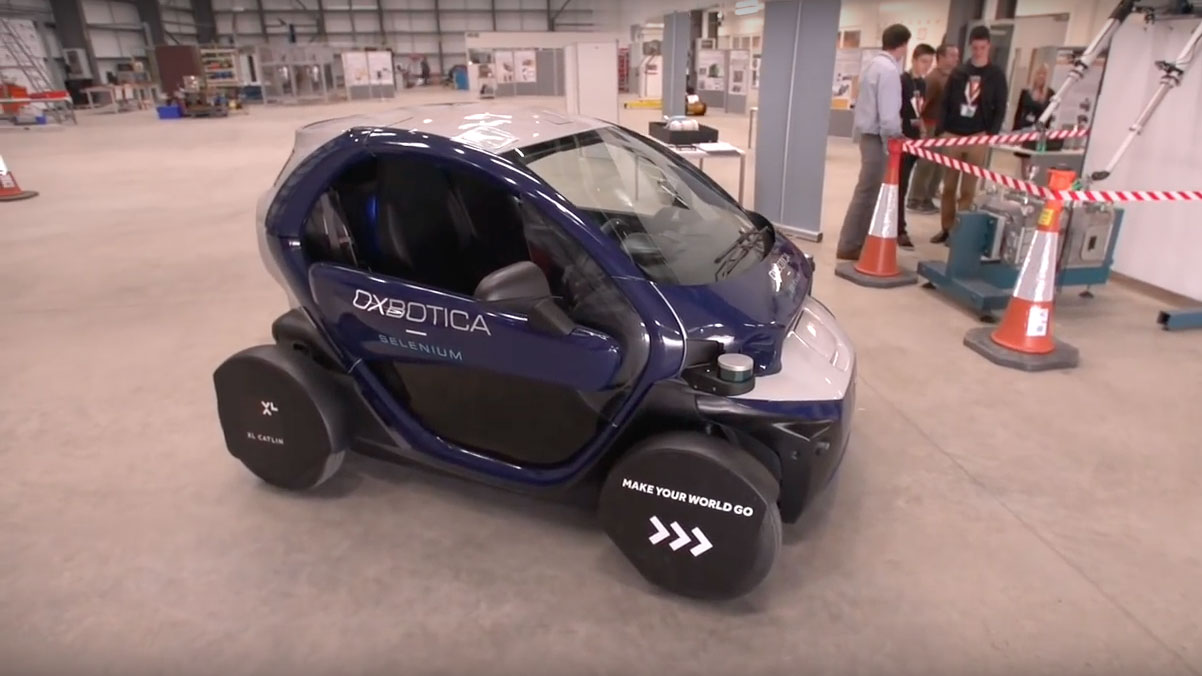
However, while accidents will play a large role in the industry'due south prospects, perhaps the most of import issue will be whether self-driving cars bear witness to exist safe not just from AI malfunctions, but also malicious AI attacks.
A recent report chosen The Malicious Use of Artificial Intelligence, written by academic researchers and Elon Musk's OpenAI watchdog grouping, detailed how hackers could infiltrate the AI of a self-driving network and cause cars to ignore safety laws.
Without protections in place, driverless cars could even get weaponized for potential attacks. The researchers recommended that companies piece of work with ane another and with lawmakers to preempt potential hacking vulnerabilities.
Will rivals similar Waymo and Uber be willing to share such data, or volition they hoard it? One tin hope that companies will see the benefits of working together for the well-being of all.
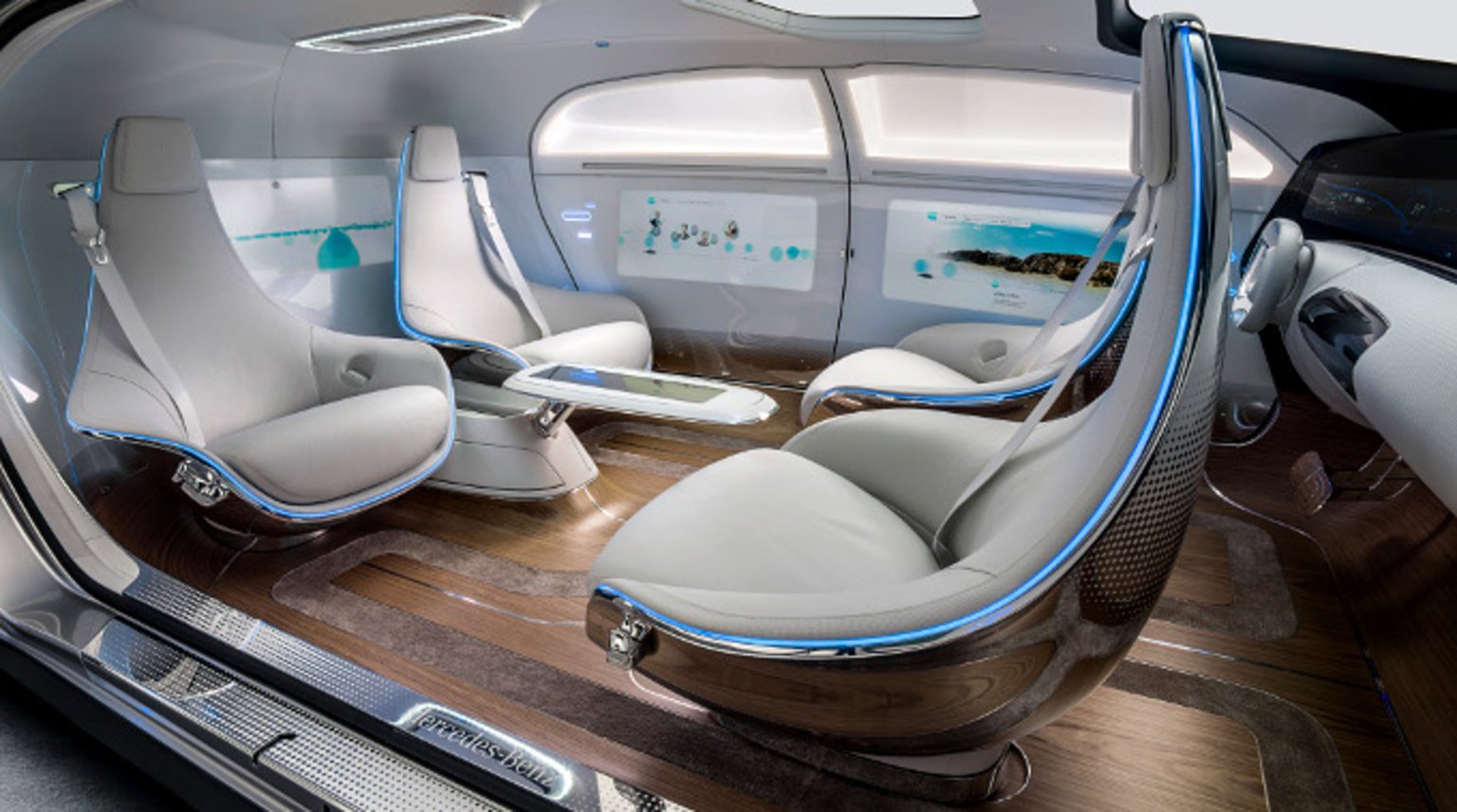
If self-driving cars practice take off, though, we tin can wait a time to come where companies rely more frequently on autonomous tech, potentially at the expense of jobs. Amazon, for example, hopes to lower aircraft costs by employing driverless delivery vehicles.
If annihilation is uncertain, it'south whether you or I will own cocky-driving cars of our own. A collection of ride-sharing companies—ZipCar, Uber, Citymapper, Lyft and BlaBlaCar—all released a policy document recommending that "autonomous vehicles (AVS) in dense urban areas should be operated merely in shared fleets."
It'southward possible that self-driving auto companies will continue to lobby governments for "shared fleet" exclusivity, so that you tin only subscribe to their self-driving services instead of owning your ain vehicle.
Of course, car manufacturers like GM and Ford will probable desire to sell their self-driving cars to consumers direct, so they might antechamber confronting such proposals.
Ultimately, with billions of dollars invested, we believe these companies will probable make driverless cars a commonplace reality within the side by side decade—though the route there might be littered with legislative speed bumps and public distrust.
Regardless, go ready for future generations to roll their eyes when you talk nigh how, back in your twenty-four hour period, y'all had to drive to work yourself.
- Everything you need to know about electric vehicles
Source: https://www.techradar.com/news/self-driving-cars
Belum ada Komentar untuk "Can I Use My Own Car Seat With Uber"
Posting Komentar